
Author: spicyturtle92

  • After Innocence, There Was Quiet

    About 2 months after we started dating, Brandon invited me to a party. I knew asking permission from Amber would end it before it started, so I didn’t ask.

    I wanted to feel pretty. I wanted to feel chosen.

    The night unraveled quickly. There was drinking. Confusion. A fight I still can’t fully remember. I left alone, heartbroken, walking home in the dark.

    Before I made it far, two of Brandon’s friends caught up with me. At first, they were kind—or at least they seemed that way. They told me they’d walk me home. I believed them.

    They stopped near the train tracks.

    What followed was not consent. It was not confusion. It was fear. I said no. I begged them to stop. My body froze when my voice failed.

    I walked home afterward feeling hollow, like I had left myself somewhere behind. I showered. I threw away the clothes I wore that night. I cried until sleep took over.

    I never told anyone.

    Something inside me shut down after that. On the outside, nothing changed. On the inside, I felt numb—dirty, unwanted, and broken in a way I didn’t yet have words for. I believed I was ruined.

    Eventually, I started hurting myself—not to be seen, but to feel. Depression swallowed me whole, but I had learned how to perform happiness. After all, I had Jesus. And Jesus was supposed to fix everything.

    What a cruel joke that was.

    Author’s Note

    This story is a key part of the spiral I never thought I would escape. I share it not for shock or sympathy, but for clarity — for myself, and for anyone who has ever wondered how deeply early lessons can sink into a person’s sense of worth. Understanding where I’ve been helps me honor where I am now, and naming it is how I loosen its hold. If you see yourself in any part of this, know that survival often begins long before we realize we’re fighting.

  • Submission Before I Understood the Cost

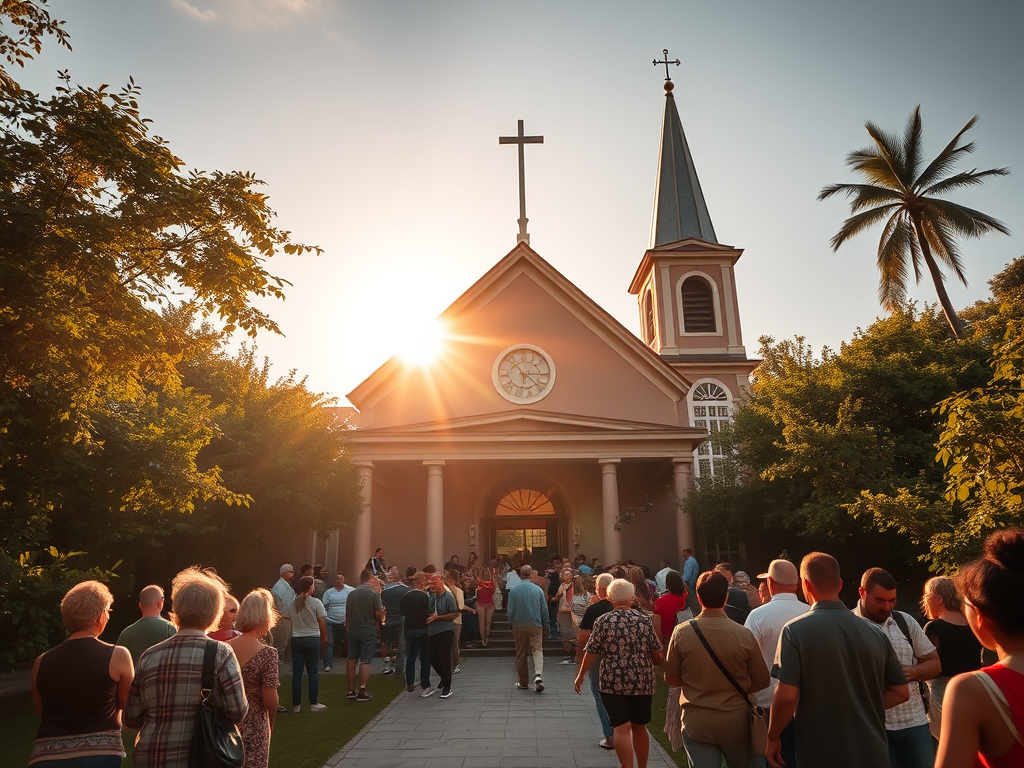
    Being raised in the church after years of “worldliness,” I wasn’t very good at keeping Jesus on my mind and boys off of it. I tried. I failed. Often.

    I was taught that my purpose as a woman was simple: cook, clean, raise children, submit to my husband, love God, and be strong for everyone else. I became delusionally submissive, because that was what earned approval. I learned quickly that people didn’t want me—they wanted someone they could shape.

    I did what was expected, even when resentment quietly took root. I was helping raise someone else’s children, caring for someone else’s home, supporting someone else’s marriage, and slowly realizing how replaceable I felt. Less like family. More like unpaid help.

    Amber wanted us to look like the perfect God-fearing family, without practicing those values behind closed doors. She thrived on attention—especially from men who admired her “godliness.” It never crossed obvious lines, but it lived in lingering looks, soft laughter, and flirtation. Trevor wasn’t as committed as he appeared either: secret conversations, hidden food that broke our strict rules, and quietly giving me access to the laptop when I wasn’t allowed to have it.

    From ages eleven to seventeen, I looked like the ideal homeschooled teenager—quiet, polite, eager to please. Inside, I was starving to be loved.

    MySpace was everything back then. I had two versions of myself: one account for church people, including Amber, and one that was actually me. I learned early that men liked “young and innocent.” I was curious, aware, and completely unprepared for what that attention really meant. Among the many unsafe interactions, I eventually met my now-husband—but that story comes later.

    When I was sixteen, I met a boy named Brandon. He didn’t belong to the church or my world, but he was there every day as I rollerbladed past his porch. The first time he spoke to me, I could barely get my words out. Everything felt electric. Easy. Safe.

    We talked constantly through an old iPod Trevor had given me. Brandon never pushed. Nothing felt forced. When we couldn’t see each other openly, I snuck out to meet him by a pond behind our trailer park. I thought I was in love.

    I didn’t know it then, but everything in my life had been training me for silence.

    I had learned to obey before I learned to question.
    To please before I learned to protect myself.
    To confuse attention with love and restraint with worth.

    So when I stepped into that night believing I had finally chosen something for myself, I had no idea how little choice I actually had.

  • That Wasn’t the Plan… But Okay.

    Around the age of nine and a half, my mom and I moved into the basement of my sister Amber’s two-bedroom apartment. It couldn’t have been more than two or three weeks later—maybe even less—when I woke up one morning with an immediate sense of panic. My mom was gone.

    I went upstairs to tell Amber I’d need a ride to school. She asked where Mom was, and I told her I didn’t know. I honestly don’t remember how I got home from school that day, but I vividly remember Amber on the phone with my mom later.

    “When are you coming to get her?
    Okay… then when will you be back?
    I already have my son to take care of.
    I can’t, Mom.
    Are you serious?
    Fine.”

    After she hung up, I went over to her. I had just said hi to Greyson—her one-year-old son—when I asked, “When is Mom coming to get me?”

    “You’re going to stay with me for a while,” she said. “Mom moved back in with John, and she thinks it’s better if I keep you.”

    At some point after that, Amber took my parents to court and was granted guardianship of me. And my parents let her. Just like that.

    That feeling—the one where you realize you’re not wanted—took over my life. The prayers I had been whispering every night for my parents to get back together went into overdrive. All I wanted was to feel chosen. To feel wanted.

    But I wasn’t.
    They gave up on me.
    And I couldn’t understand why I wasn’t good enough.

    My relationship with Amber was complicated. She was my sister, but I was expected to treat her like my mother. Over time, she stepped fully into that role. She loved me. She disciplined me. She made sure I was clean, dressed well, and rarely sitting still at home. In many ways, she did everything a parent was supposed to do.

    Then Amber found the church.

    And because she did, so did I.

    For a while, it felt like we were the perfect little family—the three of us. Then Amber met Trevor. He was young, sweet, and eager to please. Greyson and I adored him. He followed Amber wherever she went and believed in whatever she believed in. Loving God was no different.

    Trevor went from dealing drugs to becoming a disciple almost overnight, and not long after, they got married. That’s when our lives turned into a series of moves from city to city, spreading the word of God.

    At first, church felt real to me. God felt real. I felt close to Him. But it didn’t take long to realize that church wasn’t really about God—it was about performance. About proving how godly you were to everyone else.

    Every morning, Amber woke me at 5 a.m. to pray. We read a chapter of the Bible and prayed for an hour. I was a kid—I fell asleep during prayer. She’d wake me and make me continue until she was satisfied I was truly awake. After that, I’d get dressed and start my chores.

    As Amber became more consumed with appearing godly, my appearance changed too. Long sleeves to my elbows. Skirts to my ankles. My hair long and almost always pulled back. At one point, she even tried to make me wear an Amish-style head covering.

    That’s when I knew something was very wrong.

    What made it worse was that Amber didn’t hold herself to the same standards she enforced on me—even though they were supposedly what God expected.

    I hated religion.
    But I loved church.

    Because that’s where my friends were. Kids just like me—wanting to be themselves but forced to compete in a quiet, exhausting game of who could appear holier.

  • Somehow, I kept going

    As I got older, life—and school—became harder. I wasn’t a “cool” kid. My clothes were rarely new and honestly, not always clean. Kids at school and even some family members picked on me for whatever they could find. I tried to stay positive, tried to act like I didn’t hear it, but inside I hated everything about myself.

    There came a point where I didn’t want to exist anymore. One night, alone and exhausted, I reached a breaking point. What matters most isn’t the moment itself—it’s that I survived it. I remember sitting there afterward, embarrassed and shaken, realizing I didn’t actually want to die. I just wanted the pain to stop.

    So I made a quiet decision to do better in the smallest ways I could. I learned how to do my own laundry. I started showering every day. It sounds insignificant, but those acts became my first steps toward caring for myself when no one else seemed to be doing it.

    Not long after that, two women entered my life and changed everything. I met them around my tween years, and they loved themselves in a way I had never seen before—and they shared that love with me. Mrs. G had a warm, gentle energy that made you feel safe instantly. Mrs. M was more structured and firm, but never unkind. Her presence was inviting, never intimidating.

    No matter what they were dealing with in their own lives, they never turned me away. I was always welcomed, always taught something before I left their homes—whether it was a lesson, a skill, or simply how to be treated with care. I thank these women every day for giving me love and purpose during one of the loneliest times of my life.

    On my thirteenth birthday, my mom and Amber shared information with me that would permanently change how I saw my world. The man I called Dad—the man I loved with every fiber of my being—was not my biological father.

    The words landed like a physical blow. Shock. Panic. Devastation. Those are the feelings I can name now. Amber handed me a photo of the man who was supposedly my biological father and told me not to cry because I “didn’t even know him.” My mom followed that with the fact that he had taken his own life years earlier—but that he knew about me.

    I cried, but not for him. I cried because I loved my dad. I needed to know—did he know I wasn’t his? When I asked, I was told he probably did, but would never admit it.

    That day, something solidified inside me. Blood or not, my dad was my father. Always had been. Always would be. The man who ended his life was simply someone my mother once knew—nothing more, nothing less.

    What I understand now, as an adult, is how deeply moments like these affect a child’s emotional world. When a child is exposed to instability, silence, or life-altering truths without support or protection, it doesn’t just change what they know — it changes how they feel, how they trust, and how they see themselves. Children don’t have the ability to separate adult choices from their own worth, so they internalize confusion, shame, and fear as identity. Those emotions don’t disappear with age; they settle quietly and resurface later, shaping relationships, self-esteem, and the way love is understood.

  • Growing Up on Borrowed Time

    If you’ve read anything prior to this, you already know a little about my relationship with my parents.

    Most of my memories with my dad feel loud, bright, and fun. On the surface, everything looked fine—carefree even. But when I slow those memories down, I can see how thin the line really was. One mile per hour faster, one more second with his attention on the radio, one more moment with no hands on the wheel while opening a bottle—and I wouldn’t be here to write this.

    Dad always made sure I was physically taken care of before he started drinking. If we went to the bar, I had a soda, a bag of chips, and coins for the bowling machine. I stayed busy, talked to people, wandered when I wanted. On warm days, I swam at the beach while he stayed up at the bar, sometimes watching me from the balcony before heading back inside.

    I was rarely alone. Everywhere we went, someone kept an eye on me like I was their own kid. If I needed help, an adult was always nearby. To a child, that felt like safety. What I didn’t understand until much later was how often that safety depended on strangers and circumstance rather than the person responsible for me. I didn’t see the risk because the environment felt familiar—and familiarity can masquerade as protection.

    With my mom, the absence wasn’t physical—it was emotional. My earliest memories of her carry a constant tension, a feeling that connection between us was unpredictable. I learned quickly to read her moods, to shape myself around them. Her emotions mattered. Mine felt optional.

    When my sister, Amber, walked into a room, everything shifted. She didn’t have to earn attention—it came naturally. I watched, compared, and quietly measured myself against a standard I could never reach. I wanted approval so badly that I learned to shrink, adapt, and try harder instead of asking why love felt conditional.

    With my dad, I felt emotionally chosen but physically unprotected.
    With my mom, I felt physically present but emotionally unseen.

    I didn’t know then that both kinds of absence could exist at the same time—or that growing up inside that contradiction would shape the way I understood love, safety, and my own worth.

    This was the beginning of a pattern—one that would shape how I attached, what I tolerated, and how I learned to survive relationships.

  • Before I knew better…

    There are parts of my childhood that exist only in fragments. According to my mother and sisters, I experienced inappropriate behavior from a sibling at a very young age. I don’t remember the events themselves—only the room and the smell of stale cigarettes mixed with damp air. No matter how hard I try, my memories stop there.

    What I do know is this: I became aware of things far earlier than a child should. I learned, very young, to associate closeness and physical affection with feeling seen, accepted, and loved. That realization alone explains much of what followed.

    As I grew, attention felt intoxicating. My first crush was a friend of my sister’s—someone older who noticed me at gatherings and made me feel important. I latched onto that feeling of being chosen, of mattering to someone. I didn’t understand it then, but I was already learning to measure my worth through someone else’s approval.

    Throughout my early childhood, boundaries were often blurred or nonexistent. I found myself in situations with peers and adults where lines were crossed—not always violently, but confusingly. I didn’t yet have the language to say something felt wrong, only the instinct to freeze or comply. When discomfort surfaced, it was often dismissed or reframed as affection, closeness, or love.

    There were moments when I witnessed things I wasn’t meant to see, and moments where trusted adults betrayed that trust. Each experience quietly reinforced the same lesson: love was complicated, conditional, and often tied to behavior rather than safety.

    By the time I was ten, I carried an understanding of relationships that was far too advanced for my age. I formed deep attachments quickly, mistook intensity for connection, and struggled to separate affection from obligation. What I thought was love was often just familiarity with chaos.

    Looking back now, I can see the pattern clearly. I wasn’t broken or attention-seeking—I was adapting. I was learning how to survive in an environment where emotional safety was inconsistent and boundaries were unclear. Those early lessons followed me into adolescence and adulthood, shaping how I attached, how I loved, and what I believed I deserved.

    This is not where my story ends — but it is where the foundation was laid.

  • Through a child’s eyes…

    My younger years were… lacking, especially when it came to my parents doing their job of actually raising me. A lot of the time, I was left in the care of my older sisters. When I wasn’t, I kept myself busy—playing with friends or making new ones with the neighbors. I learned pretty early how to entertain myself and how to belong wherever I landed.

    Once my parents separated and my siblings eventually fled the house, I started the back-and-forth between Mom and Dad. Mom kept the house I grew up in for a while before we had to move. Dad moved too… honestly, I have no idea where he lived after that. That part is still fuzzy.

    Every single night, my prayers ended the same way—tears, bargaining, and begging whatever was up there to bring my mom and dad back together. I prayed for that until I was fourteen. Fourteen. That hope stuck around longer than it probably should have.

    I loved my time with my dad. When he dropped me off, I missed him so much that I would count the days until I got to see him again. It wasn’t that I didn’t love my mom—I loved her more than anything—but there was always a disconnect between us. No matter how hard I tried to show her I loved her, I never felt like I had her approval or that I was a priority.

    Dad’s love came easily. He and I had a bond that felt firm and safe. Anything and everything I did made him smile, and I lived for that smile. I lived for his approval. It felt good to be seen that way—to feel like I mattered without having to earn it.

    Looking back, I can see how these years quietly shaped what I believed about love, approval, and my place in the world. I didn’t have words for it then—but it was already becoming part of me.

  • The Start…

    Most of my memories before the age of seven are little flashes—more like snippets than full stories. I can remember the energy of the moment, the smells, and those tiny details that stuck with me. Hanging out with family and friends, climbing trees, pretending I was a witch who could control the wind, arguing, fighting, parties, and yes… lots and lots of drinking.

    My parents had already been married for about thirteen years before I was conceived, and their relationship was… let’s just say, complicated. My conception wasn’t exactly celebrated. Around that time, my parents were separated, and my mother had an affair. They stayed together for another six years after my birth, but just a few days before my birthday, the papers were signed, and I found myself splitting my time between both of them. Fun times, right?

    I can confidently say that at one point, my parents loved each other. Unfortunately, that love didn’t last a lifetime. I can’t speak to all of their personal struggles, but I can share what they’ve told me over the last twenty years.

    Mom had a problem with Dad drinking and flirting. Dad had a problem with Mom not keeping up with house duties and… being unfaithful. These issues were never fully worked through by either of them, and it created the environment I got to grow up in for those short, formative years. Towards the end of their time together, Dad tried everything to make Mom happy—anything she asked for, he went above and beyond… except he couldn’t stop drinking.

    Before I go any further, I want to pause here. What I’m about to share is intense, and it’s okay if it hits you hard. Take a breath. Grab a cup of coffee—or tea, or wine, no judgment—and settle in. You’re here with me, and you’re safe.

    One night, about a year before the divorce, there was a party. My siblings’ friends were there. Something happened that night—something my mom did—that made Dad upset. The arguing started, people began leaving, and I was ushered to bed because I “was too young to be a part of it.” A little while later my bladder had other plans, and I came out of my room.

    I still remember the blood, the flashing police lights, and someone grabbing me. And then… nothing. My next clear memory picks up when I was eight.

    That’s where the first real chapter of my story begins. The memories before that were flashes, but what comes next? That’s where the soul-searching starts. And I want you to come with me, because this isn’t just my story—it’s a journey about understanding, growth, and finding light in the messy, beautiful, and sometimes ridiculous life we’re given.

  • Hey Ya’ll!

    My name is… well, for now, you can call me Anne. I’ve been on this earth a whopping 33 years, and I can tell you from experience—it only gets as good as you make it. I mostly wanted to say hello… and maybe offer a small warning. Some of what you’ll read here might make you uncomfortable. If it does, I’m sorry—but I also believe discomfort is sometimes where the good stuff starts.